Common Reporting Mistakes In Drone Thermal Inspections
Drone thermal inspections can cover roofs, solar arrays, building envelopes, utility assets, and large sites far faster than many ground-based methods. A good aerial thermal image can reveal patterns that are difficult to see from the ground: possible retained moisture in a roof system, abnormal heating in PV modules, thermal bridging on a facade, overheating utility components, or unusual temperature patterns across industrial assets.
But a thermal image is not a conclusion by itself.
The value of a drone thermal inspection report depends on how clearly the thermographer documents what was observed, where it was found, what conditions existed during the flight, what the image may indicate, and what should happen next.
Below are some of the most common reporting mistakes in drone thermal inspections.
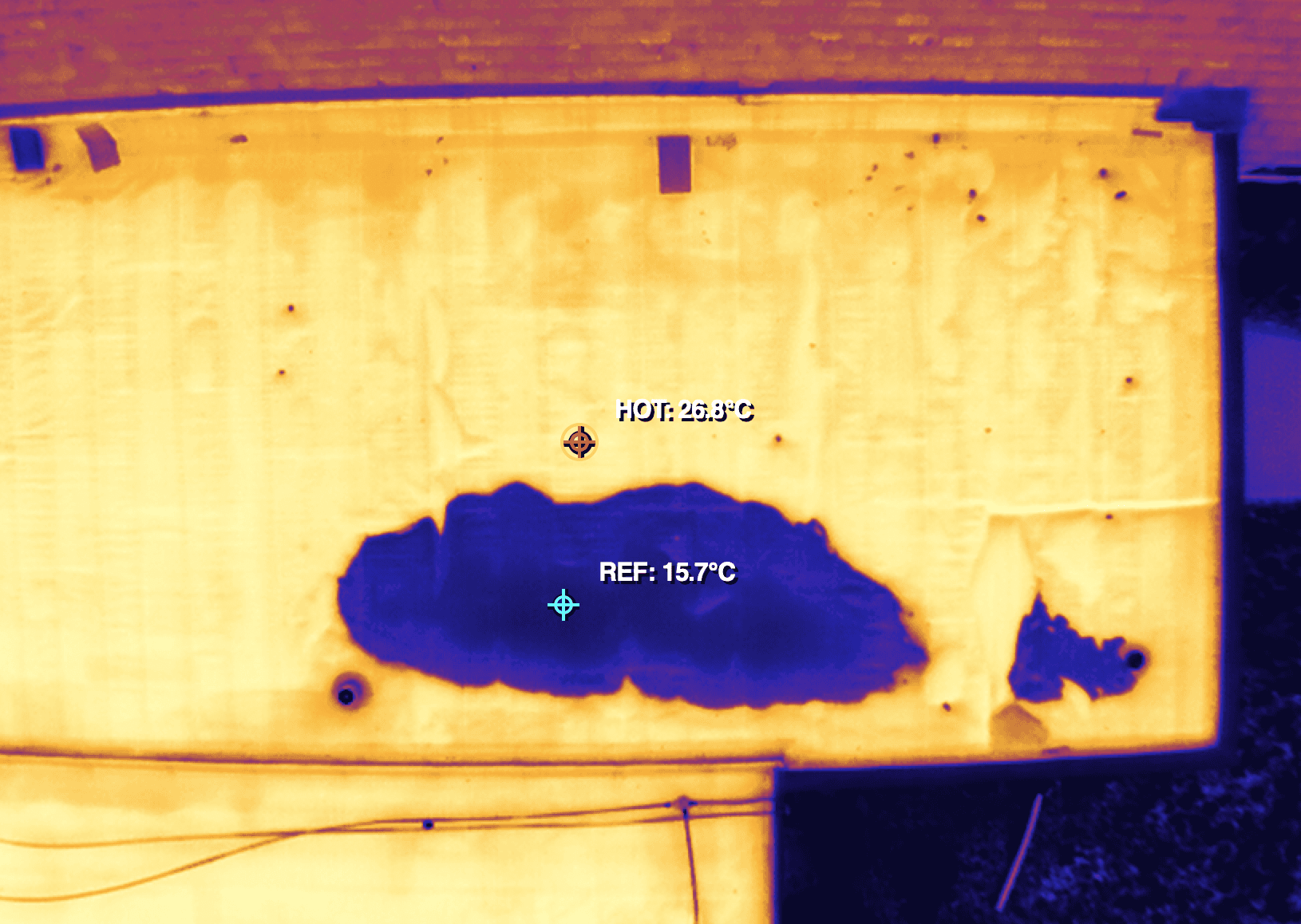
Treating A Thermal Image As Proof
One of the biggest mistakes is writing as though the image proves the suspected underlying condition.
A thermal anomaly on a roof may suggest retained moisture, wet insulation, ponding, membrane damage, or material variation. A hot spot on a solar panel may suggest a module fault, string issue, bypass diode condition, soiling, shading, or electrical imbalance. A warm area on a facade may suggest heat loss, but it could also reflect solar loading, wind exposure, material differences, or occupancy conditions.
The report should distinguish between observation, interpretation, and confirmation.
Better wording:
“Thermal imagery shows an anomaly on the north roof slope near the upper parapet. The pattern is consistent with retained moisture or drainage-related conditions. Further verification is recommended before repair scope is determined.”
Riskier wording:
“This image proves the roof is leaking.”
Leaving Out Flight And Site Conditions
Drone thermal images are heavily influenced by conditions at the time of capture. Weather, wind, cloud cover, recent rainfall, solar exposure, surface material, flight altitude, camera angle, and time of day can all affect what appears in the image.
For solar inspections, operating conditions matter too. A PV array that is not producing under appropriate irradiance may not show meaningful thermal patterns. For roof inspections, recent weather and thermal loading can strongly influence whether or not moisture-related anomalies appear.
Useful report context can include:
• Date and time of flight
• Weather, wind, and cloud conditions
• Recent rain or drying conditions
• Flight altitude and approximate viewing angle
• Camera model and thermal settings
• Site area, roof section, asset ID, or array block inspected
• For solar inspections, irradiance and system operating state
• Any limitations caused by access, safety, weather, reflections, or flight restrictions
Without this context, the report may be hard to interpret later, and follow-up inspections made more challenging.
Reporting Temperatures Without Measurement Context
A thermal camera does not simply “see temperature.” It detects infrared radiation and calculates apparent temperature based on assumptions and settings. This matters in drone work because viewing distance, angle, emissivity, reflected temperature, surface material, focus, and atmospheric conditions can all affect the apparent temperature. Reflective or low-emissivity surfaces can be especially misleading.
A report should not present temperatures as absolute facts unless the measurement method supports that level of certainty.
If temperature values are included, document the context:
• Emissivity setting
• Reflected temperature setting
• Distance or approximate altitude
• Target material
• Reference area
• Temperature difference from nearby comparable areas
In many drone reports, the pattern and temperature difference are more useful than a single maximum temperature.
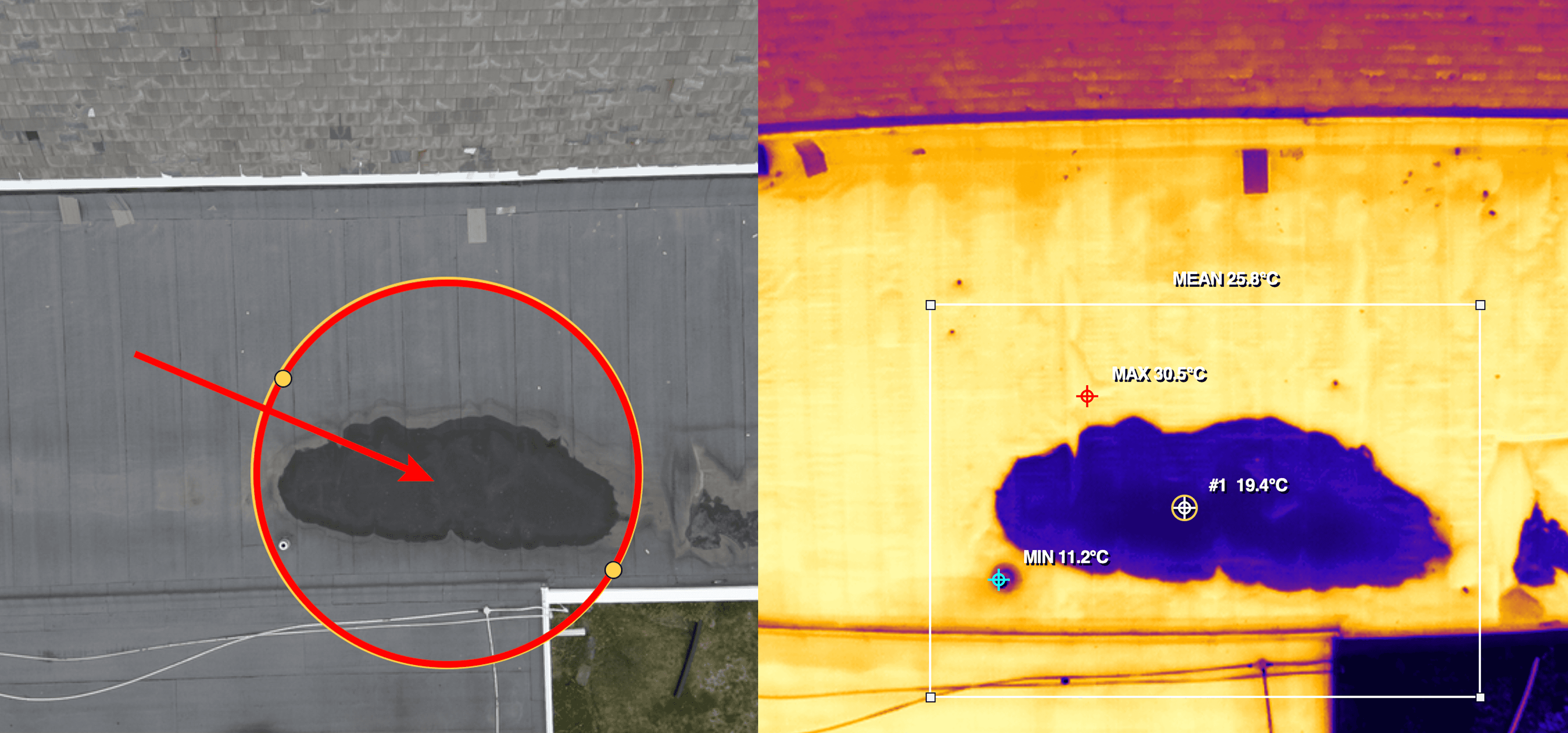
Not Tying Images To Real Locations
A thermal image from the air can be difficult to understand without location context.
The client should not have to guess which roof section, solar row, facade area, or equipment is shown. Every important finding should be tied to a visible reference image, site map, roof plan, orthomosaic, asset ID, GPS location, or annotated overview.
A good report should make it easy to answer:
• Where is the anomaly?
• Which asset, roof zone, panel row, or facade section is shown?
• How critical is the anomaly (assuming a reference standard is being used, or the inspector is accompanied by an expert qualified to assess the severity of the measurements)
• How large is the affected area?
• What should be inspected, repaired, tested, or monitored?
For large sites, location clarity is not a nice-to-have. It is what makes the report usable.
Over-diagnosing Solar Panel Issues
Drone thermal inspections are useful for identifying abnormal heating patterns in PV systems, but the report should be careful about assigning cause. A hot spot may be related to a damaged cell, soiling, shading, failed bypass diode, disconnected string, connector issue, or other operating condition. Some patterns require electrical testing or site-level verification before a root cause can be confirmed.
Better wording:
“Elevated thermal pattern observed on modules in Row 14, Table B. Pattern may indicate a module-level or string-level condition. Recommend review by a qualified solar technician and correlation with system production data.”
Riskier wording:
“These panels are defective and must be replaced.”
Failing To Explain Limitations
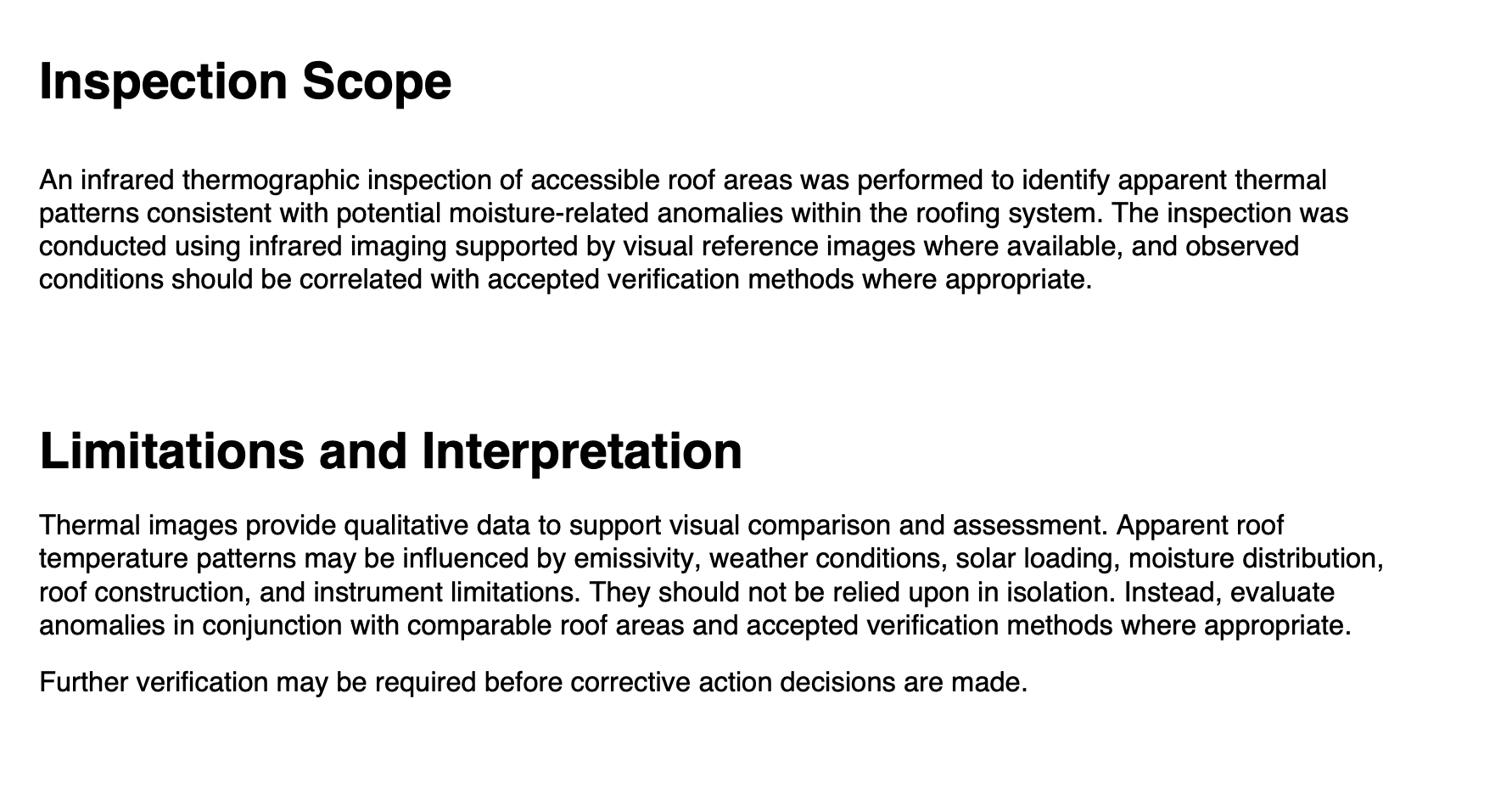
Every drone thermal inspection has limitations. The report should state them clearly.
Thermal imaging measures surface temperature patterns. It does not see through roofing materials. It does not identify moisture by itself. It does not determine electrical root cause. It does not guarantee that hidden defects are absent. It may miss issues when conditions are not favorable, when the system is not operating, when thermal contrast is too low, or when reflections and viewing angles interfere with measurement.
A limitations section protects both the client and the inspector. More importantly, it helps the client understand what the inspection can and cannot support.
No Prioritization Or Action Plan
A report that lists anomalies without prioritizing them leaves the client with work to do.
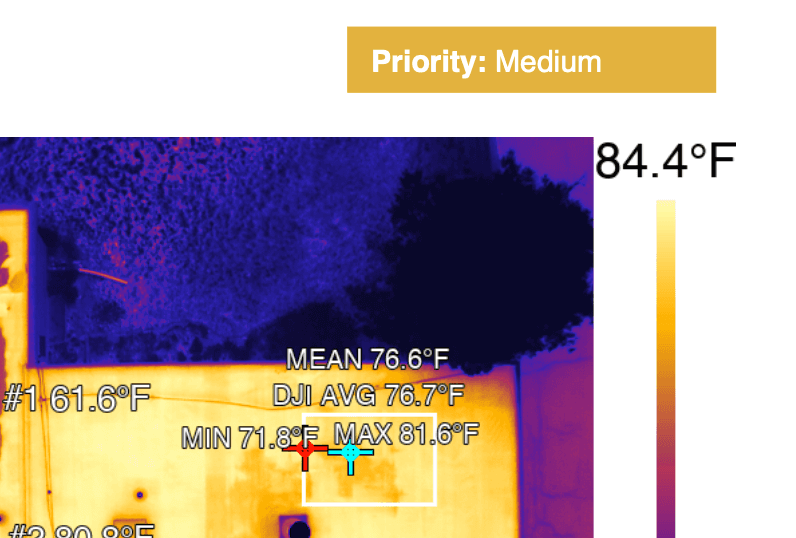
Not every finding has the same urgency. A possible electrical issue on a PV array may require prompt attention. A roof anomaly may require targeted verification. A facade pattern may be worth monitoring under different conditions. A vague heat pattern may not justify any action at this time.
Each finding should carry a clear priority classification. For example:
• Priority 1 - Requires prompt attention
• Priority 2 - Further investigation warranted
• Priority 3 - Monitor at next scheduled inspection
• Priority 4 - No action indicated at this time
This turns the report from a collection of images into a decision document — giving the client and their team the information they need to allocate resources and determine next steps.
Note that the specific corrective action, whether to repair, test, or investigate further, and by whom, is the determination of the client or a qualified expert, not the inspector. Where a qualified expert accompanies the inspector on-site, their assessment and recommendations may be included in the report and attributed accordingly, providing the client with a more complete picture alongside the thermal findings.
Missing Baselines And Comparisons
Drone inspections become more valuable when findings can be compared. For solar inspections, compare suspect modules to nearby modules under similar operating conditions. For roofs, compare anomalous sections with nearby areas of similar construction and exposure. For recurring inspections, compare the same roof zone, array block, facade section, or utility asset over time.
Where possible, document:
• Reference area or comparable component
• Temperature difference
• Prior inspection result
• Flight conditions during each inspection
• Whether conditions were similar enough for comparison
This is especially important for maintenance programs and repeat inspections.
Poor Image Selection
Including too many images can make a report harder to use. Including too few can make it feel unsupported. Each image should support a finding, clarify location, show severity, or document normal condition for comparison. Blurry, poorly framed, or unexplained aerial thermal images reduce trust.
A strong image set may includes:
• A visible overview of the site or asset
• A thermal image showing the anomaly
• A closer visible image when available
• A comparison image from a nearby normal area
If the image does not help the reader understand the finding, it probably does not belong in the final report.
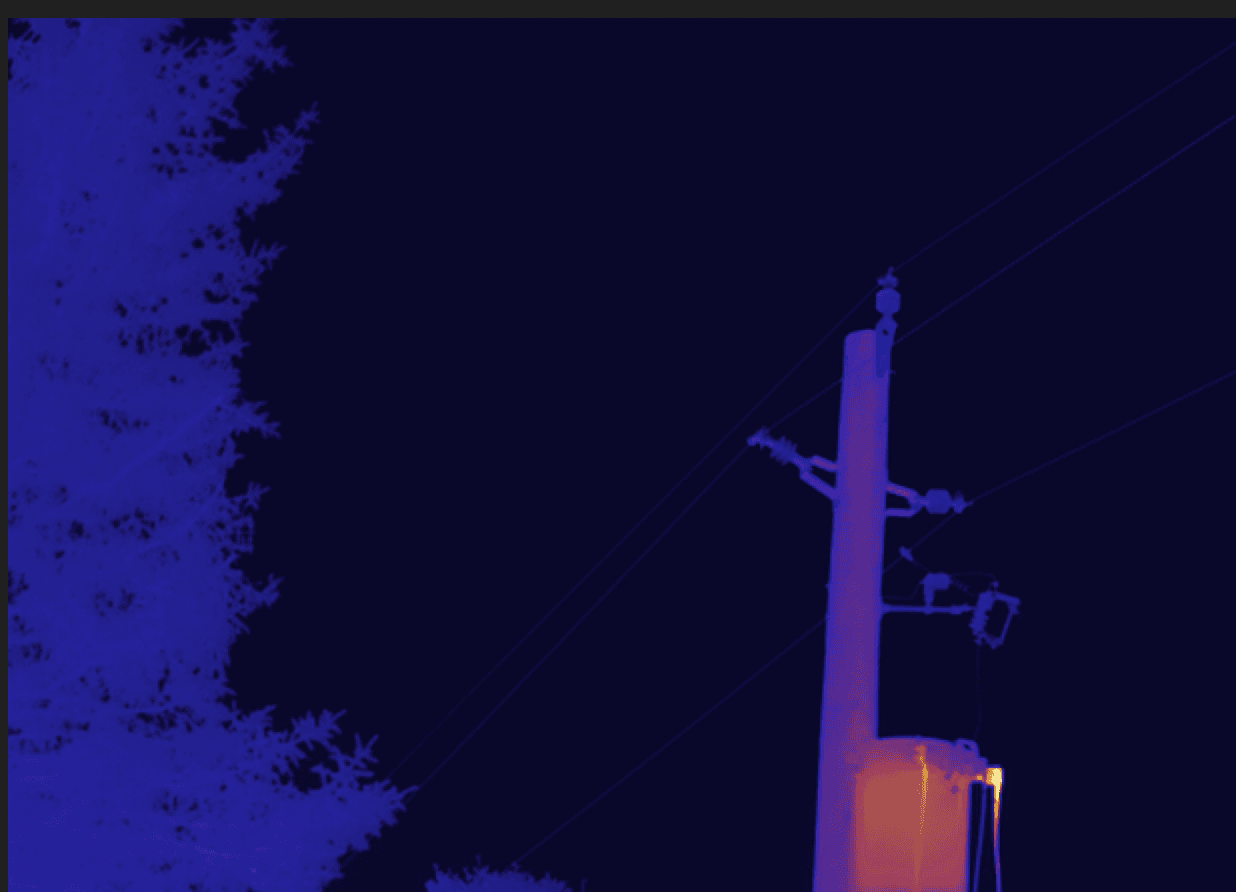
Writing Findings That Are Too Vague
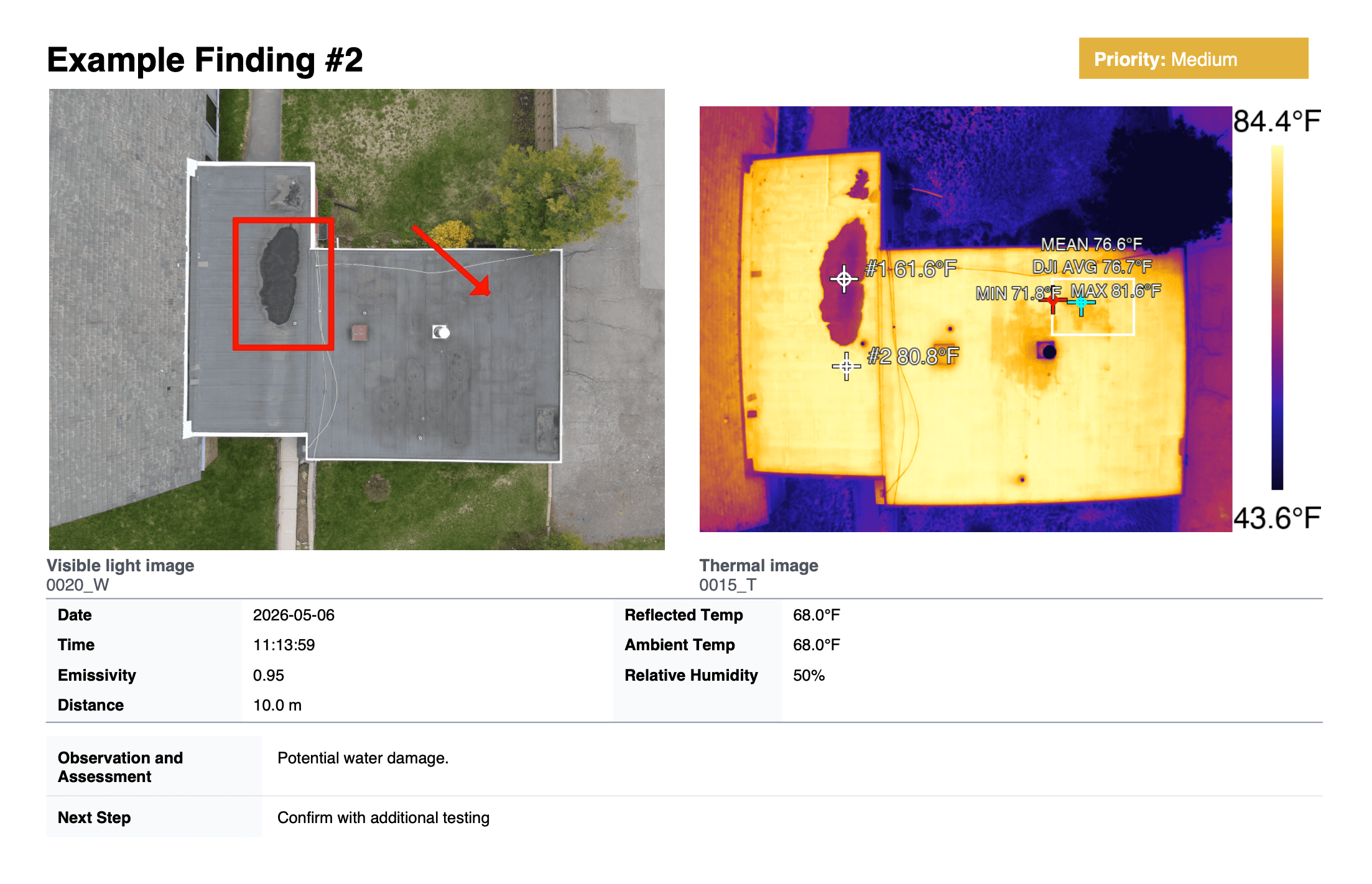
“Thermal anomaly observed” is not enough.
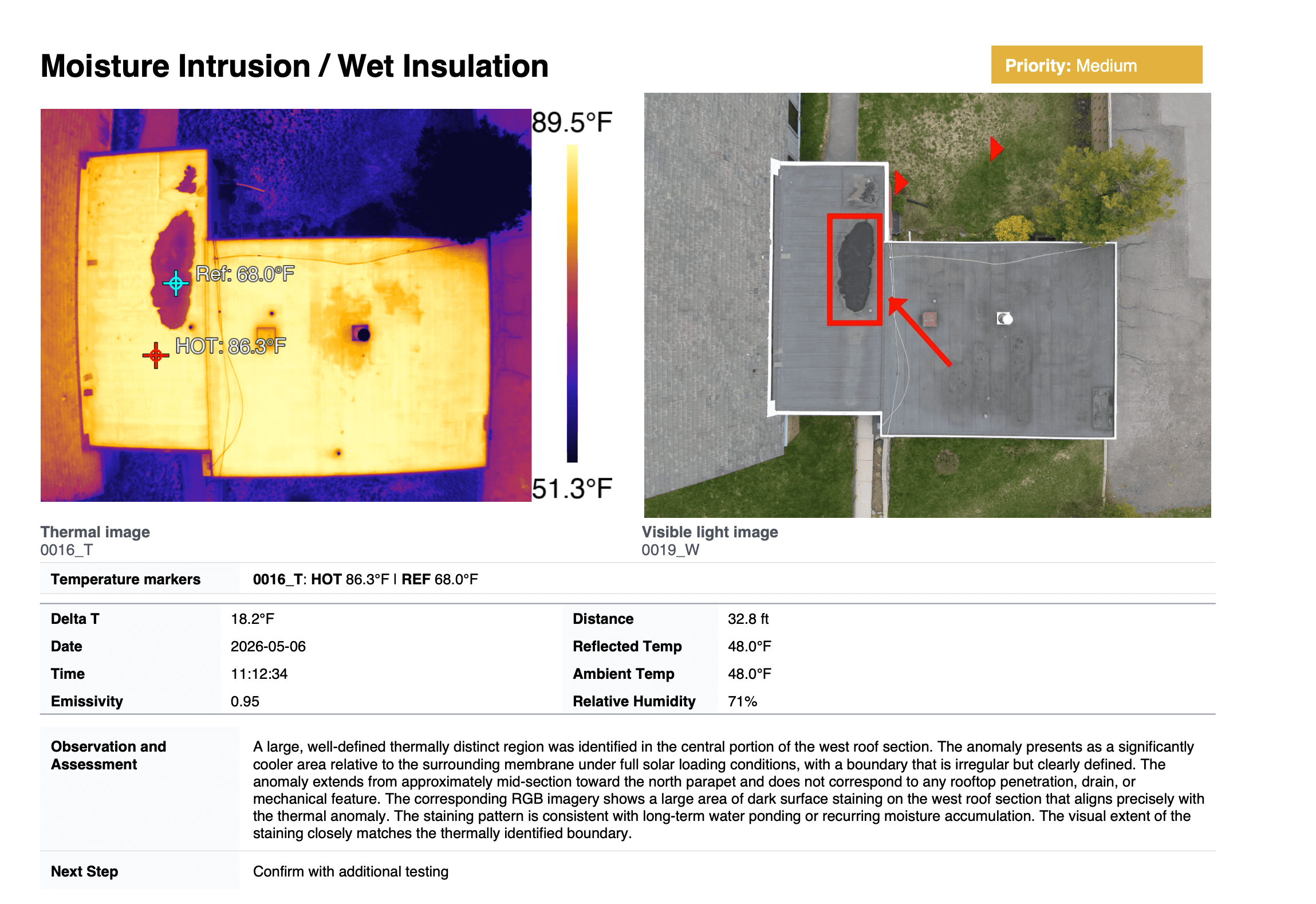
A useful finding should explain what was observed, where it was observed, what it may indicate, and what should happen next.
Better:
“An irregular cool thermal pattern was observed on the north roof slope near Drain D-3. The pattern may be consistent with retained moisture, drainage issues, or material variation. Recommend targeted verification before repair scope is finalized.”
This keeps the language appropriately cautious while still being useful. Here are a couple of examples:
Poor:
Better:
Forgetting The Client’s Original Concern
Many drone inspections begin because the client has a specific concern: storm damage, roof leakage, solar underperformance, overheating equipment, facade heat loss, or recurring maintenance issues.
A good report should connect findings back to that concern when possible.
For example:
“Client requested inspection of the west roof section after recent water intrusion reports. Thermal imagery showed several irregular patterns near the western drainage path. Further moisture verification is recommended in these marked areas.”
That is more helpful than presenting images without explaining why they matter.
Not Separating Observations From Recommendations
The report should clearly separate what was observed from what is being recommended.
Observation:
“Thermal imagery showed elevated temperatures on several modules in Row 8 compared with adjacent modules.”
Interpretation:
“The pattern may indicate a module-level, string-level, shading, soiling, or connection-related condition.”
Recommendation:
“Recommend review by a qualified solar technician and correlation with production data or electrical testing.”
That structure reduces ambiguity and avoids turning a drone thermal inspection report into an unsupported repair diagnosis.
A Better Drone Thermal Report Is Clear, Cautious, And Actionable
The strongest drone thermal inspection reports do not try to make the camera sound magical. They make the inspector’s judgment visible. They show the image, identify the location, explain the conditions, describe the limitation, and give the client a practical next step. That combination is what turns aerial thermal imagery from a striking picture into useful inspection evidence.
Drone thermal reporting is not just about finding anomalies. It is about communicating them responsibly.
The most common mistakes in drone thermal inspection reports — and how to document findings that are clear, defensible, and useful to your clients.